 Josh Johnson
Notes from JJ
The Agent Has Its Own Laptop Now
Personal agents, digital-worker onboarding, and the engineering between an idea and a finished task.

This week in business and AI was pretty ridiculous, because once again the tools keep dropping faster than most people can work them into real life.
That last part matters. We do not need more impressive demos. We need agents that fit into a Tuesday afternoon, remember the assignment, and keep moving when we close the laptop.
Meet People Where They Already Live

Meta Muse landed as an always-on personal agent, followed by a Mac app. It can work from its own persistent computer, connect to the tools you approve, and continue after the window is closed. There is a free tier with limits right now, which naturally makes me wonder what the eventual bill will look like. Still, I have been enjoying it.
I also got access to Instinct. The thing I like most is not some giant benchmark score. It fits into communication people already use: you can reach it by text or email. That is a better fit for normal life than asking everyone to learn another dashboard.
I keep hearing friends say they have no use case for AI, and I have a hard time believing it. Everybody needs a restaurant sometimes. Everybody thinks about travel, money, health, career, education, shopping, fun, or a project that keeps getting postponed. The missing piece has often been delivery: people do not wake up wanting an “agentic workflow.” They want the reservation made and the options narrowed down.
The progression now feels obvious: first we chatted with a model, then we gave it context, and now we can give it a computer. That is much closer to texting an assistant who has a laptop than opening a chatbot and starting over.
The winning tools will meet people where they already live—and quietly make the life around them easier.
Onboard the Agent Like an Employee

If you missed last week's note, Two Cities, One Desk, and a Small Swarm explains the St. Louis mini-lab and the small remote team I am building.
I bought the computers for that setup, although I have not taken them down there yet. I am still testing everything at home while balancing regular work and the rest of life.
The surprising part is how much setting up an AI worker resembles onboarding a new employee.
The first machine needs an identity, an email address, access to the right systems, technical documentation, project history, passwords handled safely, and a clear explanation of what “good” looks like. It also needs boundaries: what it can finish alone, what requires my review, and when it should stop and ask.
I found myself wishing I had already written the company handbook. Not a glossy culture document—a useful one. Here are the active projects. Here is where files live. Here is how work moves. Here are the naming rules, the checklists, the sensitive areas, and the people or systems that own the final decision.
After three setups, the process is already getting better. I am turning the repeated friction into an onboarding packet instead of solving the same small mysteries on every box.
That may be one of the most practical lessons in agent building: the model is only part of the worker. Context, access, documentation, and escalation rules are the real operating environment. If those are sloppy, a smarter model just gets confused faster.
The Gap Is in the Workflow
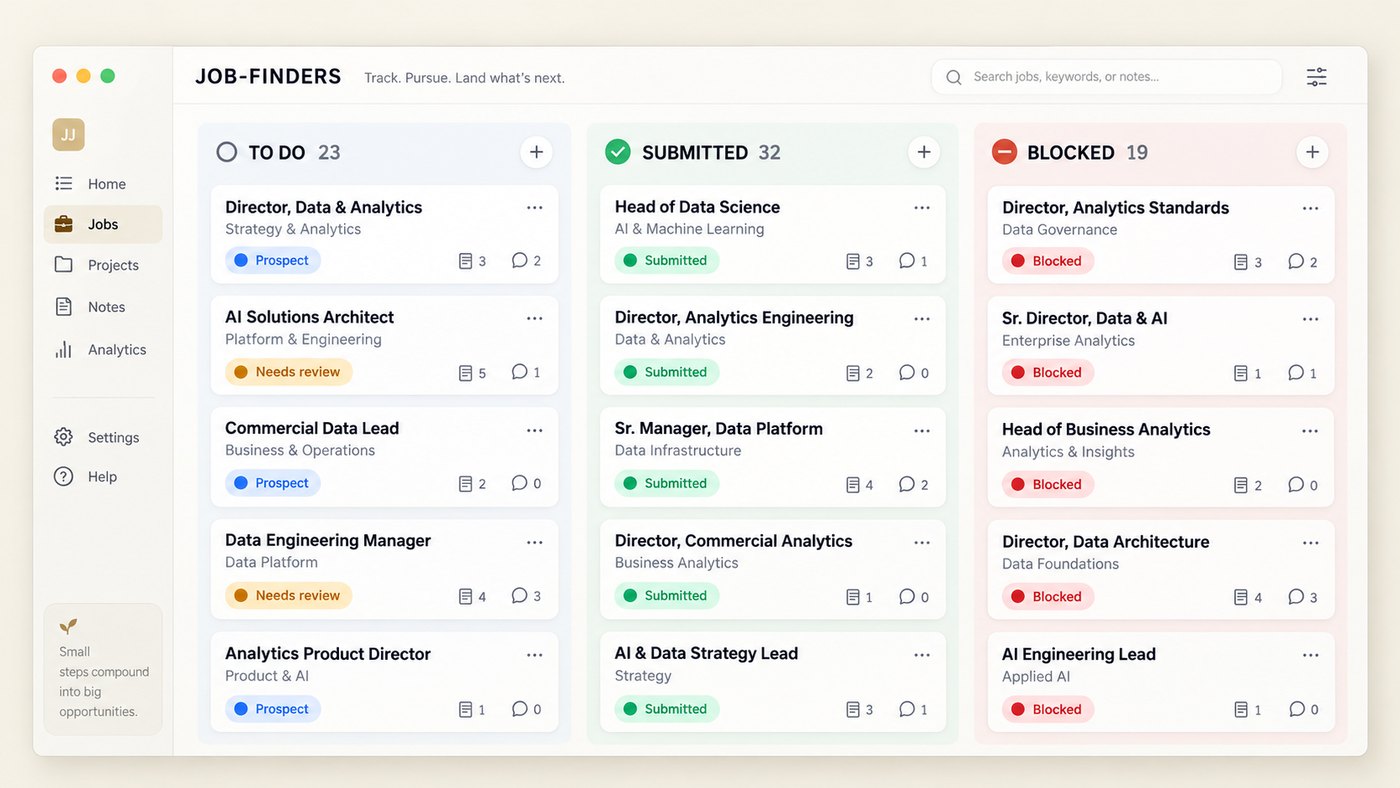
When people talk about AI dominance, they usually compare models. I increasingly think the advantage sits in the engineering around the model: connectors, context, schedules, state, and review.
Ask a frontier model for jobs and it can produce a handsome list. Give an agent a browser, a real set of criteria, and a place to track state, and the assignment changes completely.
I have Muse and Instinct working from a shared Linear board. On a schedule, they look for roles that match location, salary, title, industry, and overall fit. They verify that a posting is active, move each one through a simple queue, and record whether it was submitted, rejected, cancelled, duplicated, or blocked by something that needs me—like a CAPTCHA or a sensitive question. I review exceptions and anything consequential rather than pretending autonomy removes responsibility.
After two or three days, the experiment had collected roughly 35 relevant roles. That is not a benchmark or a promise. It is just the difference I saw between an answer and a system that remembers what happened after the answer.
More personal context can make the work dramatically better, but it raises the cost of getting access wrong. I want separate credentials where practical, narrow permissions, visible histories, and approval points before an agent submits, purchases, or represents me.
The same structure travels. My brother wants help finding eBay items with exact dimensions. Swap the job criteria for measurements and budget, keep the schedule, state, exceptions, and review, and much of the architecture survives.
That is the real puzzle: not one magical prompt, but a small dependable loop built around a real person.
Quick Links
- Meta Muse: Official overview — Meta's persistent personal agent, including its current free tier and permission controls.
- How Muse works: Meta announcement — A closer look at its secure virtual computer, connected apps, approvals, and audit trail.
- Instinct: Official overview — A personal assistant that works through familiar channels such as text and email, with access to connected tools.
- Choosing agent tasks: Meta's agentic AI guide — A useful framing for finish lines, verifiable results, and review before high-impact actions.