 Josh Johnson
Notes from JJ
535 Horsepower and Not in a Rush
A day late, a 6.7-liter rabbit hole, and a smaller definition of making a difference.

This one's a day late. I blew through Monday hanging out with the kids and nerding out over internal combustion engine designs. At some point I looked up and realized the newsletter was still in my head. I'm okay with how I spent the day.
I Lost Monday to a Small Block
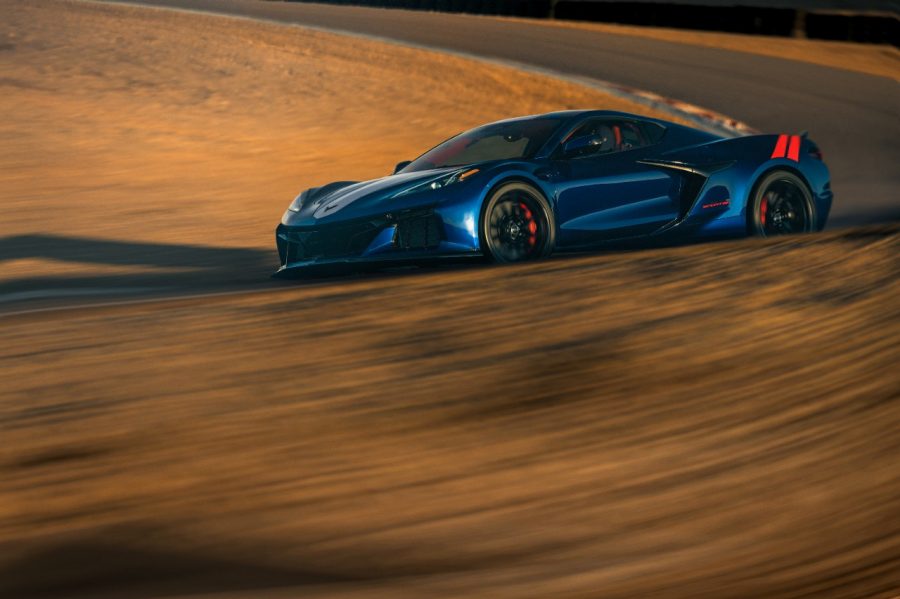
The rabbit hole was GM's 6.7-liter LS6 in the 2027 Corvette Grand Sport. It's a naturally aspirated V8 making 535 horsepower, which is a perfectly good way to get my attention. What kept it was how they got there.
There's a bigger engine, yes, but there's also the work on how air gets in and how oil keeps moving when the car is under load. Chevy's engineering deep dive is the kind of thing I open to look up one detail and end up reading all the way through. A familiar design still has room for somebody to ask, what could we do better right here?
Then we let Muse do the driving. We bounced between YouTube Shorts and AI-generated diagrams. The clips let us see the parts move; the diagrams gave us something to pause on and point at. We went from four cylinders all the way to sixteen, looking at inline engines with the cylinders in a row, V engines with two angled banks, and boxers with pistons facing each other across the crankshaft.
Then came the obvious question: How do you get more power out of it? We talked about how a turbo uses exhaust energy to compress intake air and how a traditional supercharger is driven by the engine itself. We got into nitrous too: it isn't another way to spin a compressor. It makes more oxygen available during combustion, so the engine can burn more fuel. Same big question, three different engineering answers.
Once we started talking about pounds per horsepower, the biggest number on the spec sheet stopped being the whole story. A lighter car can do more with less power. And whether the front, rear, or all four wheels are driven changes how the car can put that power down. We went from looking at pistons to talking about why two cars with the same horsepower might drive completely differently.
The kids learned a lot, and I got to stay curious with them. If the price of that is a Tuesday newsletter, I'll take it.
The Elephant Is Not This Week's Assignment

I've been spending a lot of time on strategy at MathCo. I can't share the particulars, but I'm excited about what I'm learning: a goal can tell you where to go without telling you what to do next. That's the part I want to get better at.
Here's how I'd apply it to something outside work. Say the big goal is helping more people in my community find jobs. That can get abstract fast. By Friday, though, I could sit with one person, agree on what makes a role worth applying to, and leave them with a shortlist they'd actually use.
| 01 · PickOne person, one problem. Example: Define what a good job fit looks like. |
02 · FinishOne result they can use. Example: Review a shortlist together by Friday. |
03 · RepeatKeep what made it work. Example: Save the criteria and note where we got stuck. |
The shortlist tells me something a planning document can't: did it help this person take the next step? If the same snag comes up with the next person, that's what I'd turn into a checklist or a workshop. I don't have to guess what to build before I've seen what people need.
You can keep the big goal. Just give yourself a smaller job for Friday.
Fable 5.2 Is Here. I'm in No Rush.
Anthropic released Claude Fable 5.2 yesterday. On the strength of Opus 5.5 alone, I'd be surprised if Fable isn't right up there with the best models you can put to work today. That's my expectation. I haven't tried it.
Here are three results from Anthropic's launch evaluations:
| Benchmark | Fable 5.2 | Opus 5.5 | Gemini 4 Carbon |
|---|---|---|---|
| FrontierSWE v2 Coding | 69.9% | 62.3% | 61.2% |
| AutomationBench Business workflows | 51.4% | 42.5% | 53.9% |
| OSWorld 2.1 Computer use, partial offline set | 89.3% | 87.2% | 81.5% |
Those are Anthropic's reported results at each model's highest available effort for these tests, not numbers from my own runs. Fable beats Opus on all three, and the coding jump stands out. Carbon leads the business workflow test here. That's why I like seeing the actual rows: the answer changes with the work.
And here in Q4 2026, I don't feel like I have to. I don't have an active Claude subscription, and nothing I'm working on right now needs frontier reasoning. A few months ago I'd probably have made up a project just to try it. This week I'm good.
I'm more interested in showing somebody how I used Muse and Instinct to get a job search moving: decide what fits, find the openings, prep the applications, and keep track of who gets back to you. I recently found Tsenta, which sells a similar idea as a service. It's a good idea. I wish I'd done it first. And I can still teach my version to people in my community who could use it.
I used to think making a difference meant building something for a hundred million people. These days I'd rather sit with somebody and help them get unstuck. If it helps the next person too, great. I want to enjoy that part instead of treating it like the waiting room for the big thing.
What's one big goal you could take a real bite out of this week? Hit reply. I'd love to hear what you pick.
The Takeaway
- Follow the rabbit hole sometimes. You don't owe every good afternoon a deliverable.
- Give the big goal a job for Friday. Finish something one person can use.
- Pick the work first. The newest tool will still be there when you need it.
— Josh