 Josh Johnson
Notes from JJ
Pets, Less Slop, and Real Moats
A Monday rhythm, a little desktop company, and a harder question for builders
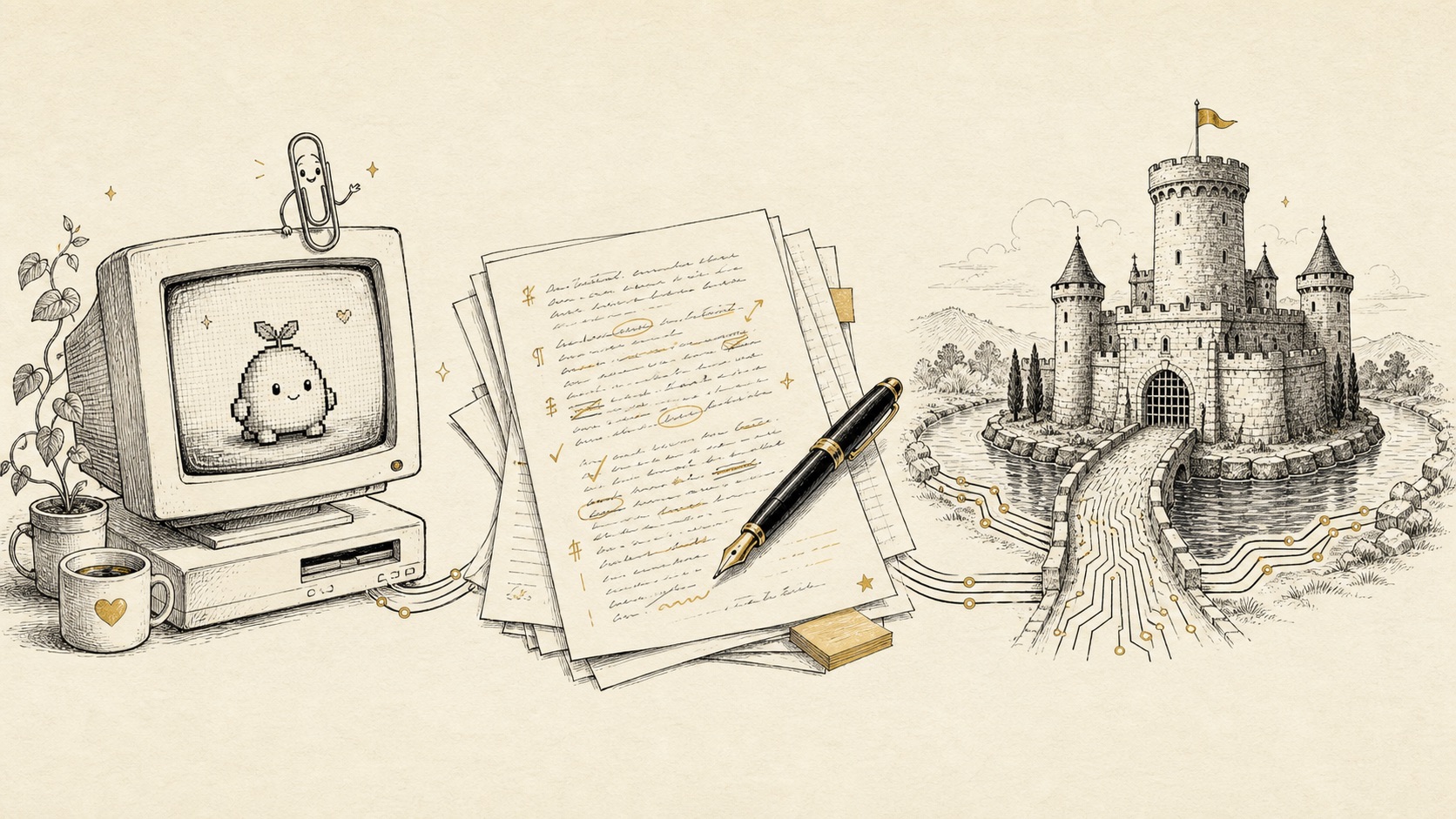
Quick life update before we get into it: Notes from JJ is moving to Mondays.
I missed the Saturday send this week, and it made me rethink the cadence. Most of the things I write about here — AI tooling, data work, building products, and the messy process of shipping — are workday conversations. Monday is a better time to put an idea in front of you, when you may actually be planning, building, or deciding what deserves attention that week.
It is a better rhythm for my new work schedule too. So from here on out, expect these notes on Mondays. And since this is the first Monday edition, I wanted to start with three things on my mind lately: a small feature that makes AI feel more present, a practical way to make generated writing less generic, and a reminder that shipping quickly is not the same as building something durable.
ChatGPT Pets: A Better Version of Clippy
If you've been reading this newsletter for a while, you probably know I'm a huge fan of the ChatGPT/Codex app. A few weeks back, I noticed they added this concept of Pets: a little screen-overlay companion, very reminiscent of Clippy from Microsoft Office 98.
It is a cute idea, but it is also surprisingly useful. The pet notifies me when a prompt is done, gives me an always-on clickable GPT shortcut, and keeps long-running work visible while I move between tabs. More importantly, it makes me feel like my assistant is actually there. When I need real-time help, I can reach for it immediately instead of going to a website that may or may not have the context I need.
That matters when I am bouncing among projects, research, terminals, and browser windows. I do not have to reconstruct the whole context from scratch; the pet is a tiny reminder that the work is still there waiting for me.
The useful part is not the mascot. It is the interaction model: work should be easy to re-enter. The best AI surfaces are not always the ones that say the most; sometimes they are the ones that make the current state obvious at a glance.
No AI Slop Is a Real Quality Tool

One thing you learn quickly once you can generate a lot of AI-assisted work: you can generate slop at industrial speed.
Peter Yang's No AI Slop is one of the few skills I would happily keep in my working context. It catches the patterns that make AI output instantly recognizable: the binary contrast opener, the fake-deep ending, vague "innovation" language, repetitive framing, and the overly polished cadence that sounds like nobody in particular.
That matters because the goal is not to hide the fact that you used AI. The goal is to make the output worth reviewing. A strong first pass gives a human editor something concrete to sharpen; a slop-filled first pass gives them a cleanup job.
I have even been teaching my kids to look for these patterns. It is a useful literacy skill now. Once you notice the repeated phrasing and empty transitions, you cannot unsee them — and honestly, reading unedited AI prose starts to feel painful.
I am usually skeptical of adding more skills, rules, or context to an agent. This one earns its place because it protects the part that should remain human: voice, judgment, specificity, and the willingness to say something real.
Fast Code Is Not a Moat

We can now produce websites, apps, internal tools, and polished demos faster than ever. That is exciting. It is also flattening one of the old advantages of building digital products.
The uncomfortable truth is that a cool app is no longer much of a moat. If the whole business idea is "we made a useful interface," somebody else can make a similar interface quickly — often before you have finished explaining yours.
So when I think about AI, entrepreneurship, and product ideas, I keep coming back to a longer question: what will this business still do exceptionally well 20 years from now?
A defensible answer might be trusted customer relationships, proprietary data created through real usage, operational depth, a distribution advantage, regulatory knowledge, a community, or a workflow that gets stronger every time someone uses it. It is rarely just the application itself.
AI makes building cheaper. That should raise the bar for deciding what to build. There will be a million possible ideas. The durable ones will be the ideas attached to a reason people cannot simply swap you out next quarter.
Quick Links
- No AI Slop: github.com/petergyang/no-ai-slop — A skill that identifies and removes 20+ common AI-writing patterns while aiming to preserve voice.
- ChatGPT Projects: OpenAI Help Center — How projects keep chats, files, instructions, and long-running work together.
- Scheduled Tasks: OpenAI Help Center — How ChatGPT can run recurring work and notify you about updates.